
Welcome to Otherworld Radio, a Lunch Lord creation. We are a small, ultra-low-power (part 15 FCC rules) community station in Lincoln, NE. We also broadcast to the world through our webstream.
Otherworld Radio is Lincoln, Nebraska’s FREE Underground NEWS & WEATHER Source (scroll down to see our news feed — updated daily around midnight).
🙂 LISTEN USING ANY OF THE OPTIONS BELOW! 🙂
📻 LISTEN TO OUR WEBSTREAM HERE:
Or copy this link into your browser or favorite media player:
https://stream.otherworldradio.com:8443/stream
Download .m3u playlist (great for VLC, Winamp, etc.)
(Note: The :8443 port is required for secure/HTTPS streaming. Most modern players like VLC, Winamp, or browser-based players handle it fine.)
📡 LISTEN OVER THE AIR (IF YOU ARE IN WEST CENTRAL LINCOLN, NE) ON 1680 AM. OUR BROADCAST RANGE VARIES FROM 0.5 MILES TO 3 MILES.
👾 YOU CAN ALSO LISTEN TO OUR ARCHIVED RADIO SHOWS HERE!!!

📺 See our other media projects here: https://www.youtube.com/@OWBroadcasting
🌛 If our stream is down and you want to listen to live radio on the web, we recommend these great stations: Cathedral 13 — https://cathedral13.com/ or KWSX: Web Sex Radio — https://radio.kwsx.online
🌩️ WEEKLY FORECAST 🌤️
LINCOLN WEATHER🌦️ HOURLY FORECAST 🌞
🌪️ RADAR (UTC = CDT -5, CST – 6) ⚡
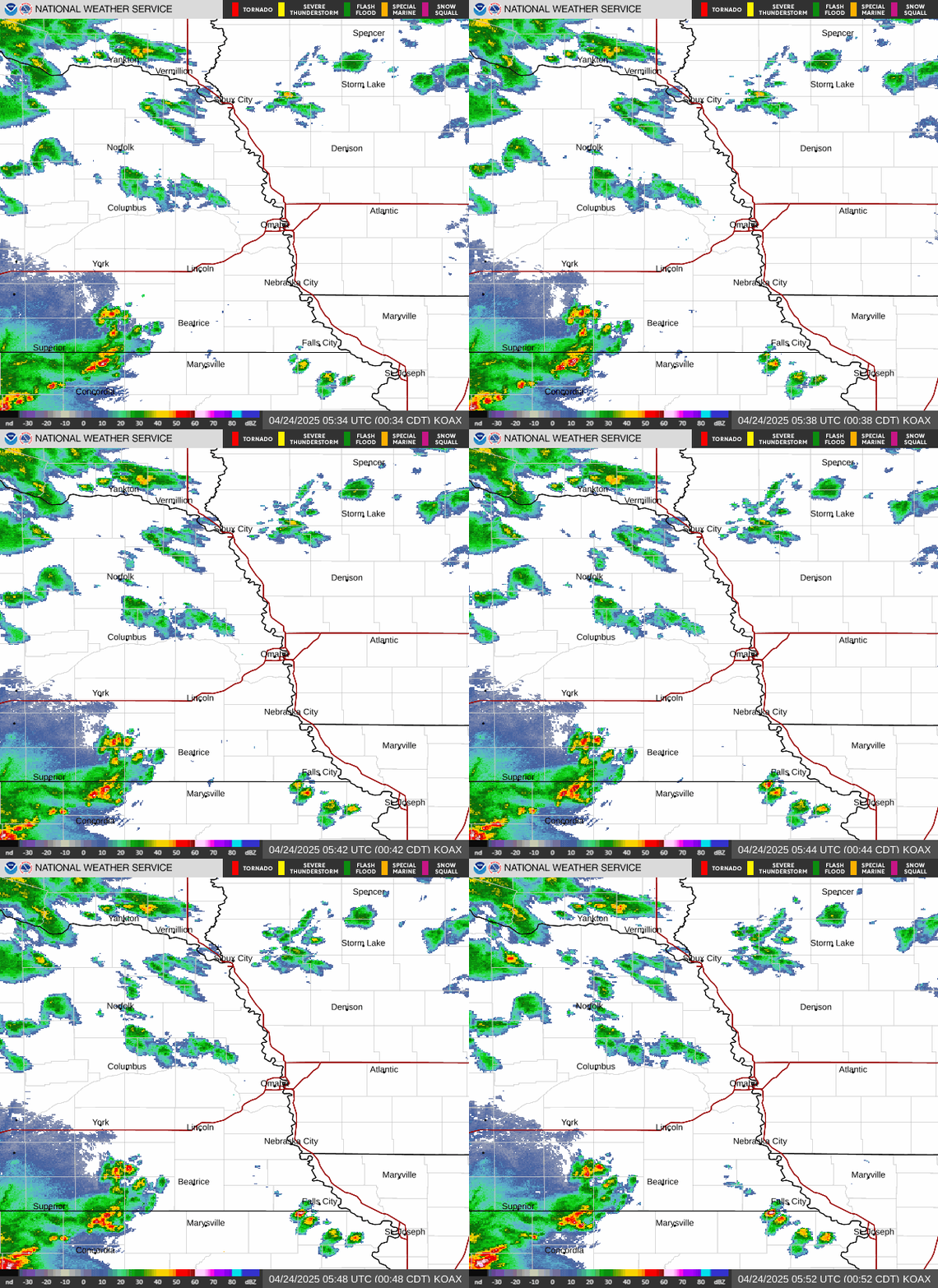
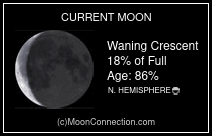 |
🌪️ Lincoln, NE weather page — https://gwwilkins.org/ ❄️
📰———🌃 N E W S 🦅———🌍

📊 DAILY NEWS BRIEF — August 20, 2026
🌃 1) LOCAL NEWS — Lincoln, NE & Surrounding Areas
- Flash flooding has become an immediate infrastructure concern in northeast Lincoln. Heavy rainfall produced flooding in northeast Lincoln on August 19, with local reporting showing significant water accumulation and affected roads. The larger preparedness concern is not the isolated event but the possibility of repeated high-intensity rainfall overwhelming drainage and temporarily disrupting road access, especially at known low points. Lincoln maintains a live street-closure system that specifically tracks flooded and emergency-closed roads.
Lincoln street-closure map - Lincoln’s water system is reliable now, but the city is treating long-term source diversification as a resilience priority. The city says its existing supply is projected to meet demand for another 20–25 years, while its Water 2.0 project seeks a second source. For preparedness purposes, this is a latent rather than acute risk: the important issue is that drought, population growth or infrastructure failure could make dependence on a single primary system more consequential during a prolonged disruption.
Lincoln Water System — Water 2.0 - Lincoln’s 2026–28 budget continues shifting substantial resources toward public safety and infrastructure. The proposed budget increases tax-supported spending while allocating major resources to police, fire, streets and utilities; local officials have also added funding for Northeast Police Station security and pedestrian infrastructure. This indicates institutional capacity is being maintained rather than a current breakdown, but the need to absorb growing operating costs while preserving infrastructure is an important long-term resilience consideration.
City of Lincoln budget documents - Nebraska agriculture remains exposed to a sharp west/east weather divide. Recent assessments show substantial rainfall improved conditions across parts of eastern Nebraska, while western Nebraska has deteriorated into extreme and locally exceptional drought. That creates a bifurcated agricultural risk: eastern production may face excess-moisture/flooding problems while western producers face heat, water stress and potentially higher input costs.
U.S. Drought Monitor — Nebraska - Nebraska hospitals are facing persistent financial stress rather than an acute capacity collapse. The Nebraska Hospital Association reports that 55% of surveyed hospitals characterize their financial condition as challenging or very challenging and 32% report negative operating margins. The downstream risk is particularly important in rural Nebraska: prolonged financial deterioration can mean service reductions, closures or longer transport distances, increasing the fragility of the broader healthcare network serving Lincoln and surrounding communities.
Nebraska Hospital Association
🦅 2) US NEWS
- The U.S.-Iran war remains the dominant U.S. national-security risk, with diplomacy stalled and Washington increasing economic pressure. President Trump warned countries supporting Iran that they could face severe economic consequences, while conflicting signals continue over whether negotiations are occurring. The danger is that economic pressure becomes a substitute for a diplomatic off-ramp while Iran simultaneously threatens a more offensive military posture. That creates a pathway toward renewed U.S. strikes, attacks on American forces or escalation involving U.S. allies.
Reuters — U.S. warns countries supporting Iran - The Strait of Hormuz crisis is already translating into an American energy and inflation problem. Oil reached a three-week high on August 20, with Brent around $92.82/barrel, while traffic through Hormuz remains dramatically constrained. The more serious risk is refined fuel rather than crude alone: Reuters reports that more than 20% of Middle Eastern refining capacity has been lost, while diesel and gasoline markets are experiencing substantial pressure. A prolonged disruption would feed into transportation, food, agriculture, manufacturing and consumer inflation throughout the United States.
Reuters — Oil prices and the Iran war - U.S. critical infrastructure is facing an expanding industrial-control-system cyber threat. Federal agencies warned that hackers are actively targeting Siemens programmable logic controllers used in water, energy and manufacturing systems. Officials have not formally attributed the activity to Iran, although the warning comes amid heightened concern about Iranian-linked cyber activity. The important preparedness implication is that a geopolitical conflict can produce domestic disruption without a conventional attack on U.S. territory—particularly through water, energy and industrial systems.
CISA — Water and wastewater cybersecurity warning - U.S. federal debt has crossed $40 trillion while long-term Treasury yields remain unusually elevated. The debt milestone itself does not imply imminent financial collapse, but it reduces fiscal flexibility precisely when war-related energy inflation and higher borrowing costs are creating additional pressure. The Treasury has expanded bond buybacks to support liquidity after the 30-year yield reached a 19-year high. Persistent high yields could eventually raise government financing costs and transmit tighter credit conditions throughout the economy.
Reuters — U.S. debt exceeds $40 trillion - The domestic normalization of military involvement in civil affairs remains a governance risk. Thousands of National Guard personnel have been deployed in Washington, while Reuters’ analysis found that the deployment appeared in only a small fraction of criminal prosecutions during its first year. The immediate question is effectiveness; the larger issue is institutional precedent. If military forces become increasingly routine participants in domestic policing, disputes over authority, federalism and appropriate use of military personnel could intensify during future civil disorder.
Reuters — National Guard deployment in Washington
🌍 3) WORLD NEWS
- Iran’s confrontation with the U.S. remains the world’s highest-intensity geopolitical crisis, with Hormuz still severely constrained. Iran says the Strait will remain closed until Washington satisfies conditions from a failed interim agreement, while the U.S. rejects that interpretation and says no negotiations are underway. Only nine commodity vessels were recorded transiting on the latest day in available tracking data. Because Hormuz previously carried roughly one-fifth of globally traded oil, prolonged disruption can become a global energy, shipping and inflation crisis rather than merely a regional military problem.
Reuters — Hormuz shipping amid U.S.-Iran stalemate - The Gulf conflict is spreading its economic and political consequences among U.S. partners. The UAE has halted financial and economic dealings with Iran after reported missile activity, putting additional pressure on an important commercial relationship and regional financial hub. The danger is a chain reaction in which Gulf states become progressively more directly involved, reducing the number of countries capable of mediating between Washington and Tehran while increasing the number of potential targets.
Reuters — UAE financial embargo on Iran - The energy consequences of the Iran war are becoming structurally harder to reverse. More than 20% of Middle Eastern refining capacity has reportedly been lost, while Russian refining has also been damaged by Ukrainian attacks. This matters because restarting damaged refineries takes considerably longer than restoring a shipping route. Even a diplomatic breakthrough could therefore leave diesel, gasoline and other refined-product markets tight for an extended period, prolonging inflation well beyond the shooting.
Reuters — Iran war energy crisis analysis - Russia’s war against Ukraine continues to intensify despite stalled diplomatic efforts. Russian ballistic missile strikes hit Kyiv on August 19, killing 12 people according to Ukrainian officials and causing damage to civilian and critical infrastructure; approximately 90,000 homes temporarily lost electricity. Ukraine is simultaneously striking Russian logistics and energy infrastructure. The risk is continued reciprocal attacks on infrastructure, increasing pressure on air defenses and raising the possibility of incidents involving NATO territory.
Reuters — Russian strikes on Kyiv - North Korea’s estimated nuclear arsenal may be substantially larger than previously assumed by Washington. South Korea’s defense minister now estimates North Korea possesses roughly 80–120 nuclear warheads. The immediate threat is not necessarily an imminent attack, but the expanding arsenal complicates deterrence calculations in Northeast Asia and increases the consequences of a conventional crisis becoming nuclear. It also demonstrates how multiple strategic crises are developing simultaneously while U.S. attention is heavily concentrated on the Middle East.
Reuters — South Korean estimate of North Korea’s nuclear arsenal
⚠️ 4) DAILY RISK ALERT
The single highest-risk global event is the continuing U.S.-Iran war and associated Strait of Hormuz disruption. It outranks the Ukraine war, North Korea and domestic U.S. instability because it simultaneously combines active interstate warfare, direct involvement of a major power, a threatened global chokepoint and an already-visible energy shock. Hormuz traffic remains extremely depressed; oil is rising; Middle Eastern refining capacity has been damaged; Gulf states are becoming more directly involved; and Washington and Tehran appear to disagree fundamentally about the diplomatic framework. The risk is therefore not simply another round of fighting—it is a transition from a regional war into a prolonged global fuel, shipping and inflation crisis. Local flooding and infrastructure concerns in Lincoln are comparatively minor, but the national cyber threat to water systems and the energy shock demonstrate how geopolitical events can eventually translate into domestic infrastructure and supply-chain problems.
⚡ Monitor the three escalation indicators most closely: Hormuz shipping, attacks on U.S./allied forces, and evidence of renewed large-scale U.S. strikes. A sustained further decline in tanker traffic, attacks on U.S. military facilities, or a transition from economic pressure back toward major kinetic operations would materially increase the probability of another energy-price shock and broader regional escalation.
⚡ Treat fuel availability as a developing supply-chain variable rather than assuming today’s prices represent the worst case. Keep normal vehicles reasonably fueled, avoid unnecessary trips, and monitor gasoline/diesel prices and refinery/shipping developments. The objective isn’t panic buying; it’s avoiding dependence on a single last-minute resupply trip if regional fuel logistics deteriorate.
⚡ Harden your household against a short-duration infrastructure disruption. The federal warning about attacks on industrial-control systems makes water and utility disruption a more relevant preparedness consideration than it was previously. Maintain a modest reserve of drinking water, shelf-stable food, essential medications and backup lighting/power sufficient for several days rather than attempting to prepare for an indefinite collapse.
For more news see: http://68k.news/
OR: News Now
————————–end news————————-
Comics
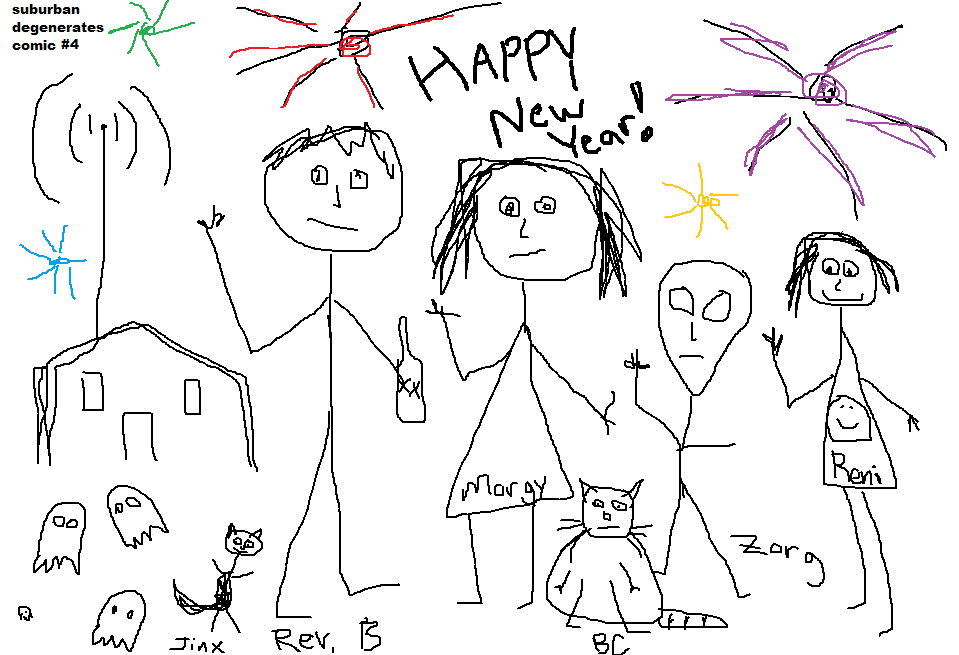

SMBC (Saturday Morning Breakfast Cereal)
https://www.tumblr.com/blog/the-funny-papers
————————-end comics————————
If you are viewing this page on a mobile device, the menu can be found in the upper right part of the screen (click the two lines). Or you can use the menu below:
LISTEN NOW / HOME * Schedule * Radio Listening Guide * DJs * Links * Aesthetics * Contact * Fireplace * Secret Messages * Archived Radio Shows * Guest Book * ComiCs – Blog

